Eight Years in Development. Eight Days to Launch.
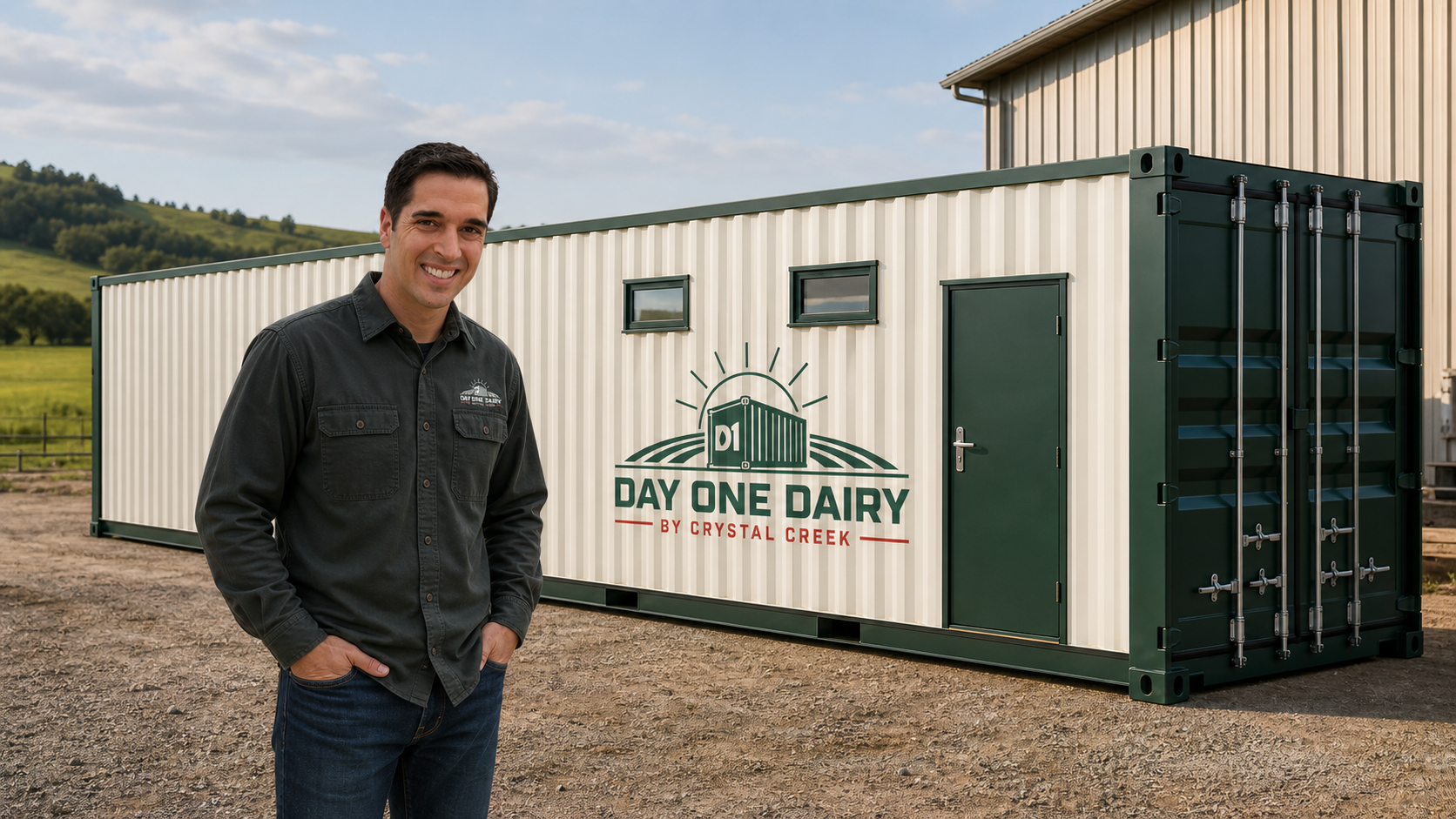
Quick summary: Crystal Creek USA had spent more than eight years developing the technical foundation for a transportable dairy system. Survivor Mountain helped turn that engineering into Day One Dairy—a named product family, a clear commercial story, a working website and a route to market—in eight days. This is the story of two Oregon firms combining the skills they already had to create something neither needed to build alone.
Milk can be produced almost anywhere. Safely receiving it, controlling temperature, cleaning the equipment, processing it and protecting the finished product is harder. For small farms, cooperatives and communities far from established processing infrastructure, that gap can decide whether fresh milk becomes a reliable local product or a fragile commodity with nowhere practical to go.
That is the opportunity behind Day One Dairy: factory-prepared, transportable dairy capability designed around the work operators must repeat every day. The aim is not to make dairy engineering simplistic. It is to coordinate the equipment, refrigeration, sanitation, controls, documentation and service pathway before a module reaches its destination.
The engineering existed before the brand
Crystal Creek is a family-owned Oregon company with hands-on experience in dairy installation, refrigeration, fabrication and maintenance. The Thackeray family’s story is rooted in keeping real farms operating—often by solving the practical problems that appear after plans meet equipment, weather, animals and a working day.
For more than eight years, the team had also been thinking about a different kind of dairy project: a coordinated system that could be built under controlled conditions, shipped to a prepared site and commissioned without designing every element from the ground up in the field.
“Day One Dairy had been in development for more than eight years, but we could never quite get it over the finish line as a market-ready product. We already had the dairy engineering and field experience. What we needed were product-development, positioning and digital skills outside our day-to-day work. Paul joined the team, and within eight days we had a name, a product family, a working website and a route to market. That allowed us to focus on what we do best: engineering, fabrication and supporting dairy producers.”
— Tyler Thackeray, Crystal Creek USA
The underlying point is important: Crystal Creek did not need an outside firm to teach it dairy. It needed help converting years of technical knowledge into a product customers, partners and funders could quickly understand.
The problem Day One Dairy is designed to solve
Traditional dairy infrastructure can require several contractors, long design cycles and a great deal of coordination at the receiving site. That work remains essential, but repeating it from zero on every project can consume time and introduce uncertainty.
Day One Dairy moves more of that coordination into the factory. Equipment, utilities, hygienic surfaces, drainage, refrigeration, controls and operator workflows can be reviewed as one system. The receiving farm or organization still needs suitable access, foundations, power, water, drainage, permits and trained operators. The difference is that the production environment arrives with far more of the engineering already resolved.
For an Oregon family farm, that could mean a manageable route into local processing. For an international cooperative or food-security program, it could mean evaluating a defined capability instead of beginning with an empty building and a collection of unrelated machines. Every project remains subject to local engineering, food-safety and regulatory review.
Day One Milk first. Creamery next.
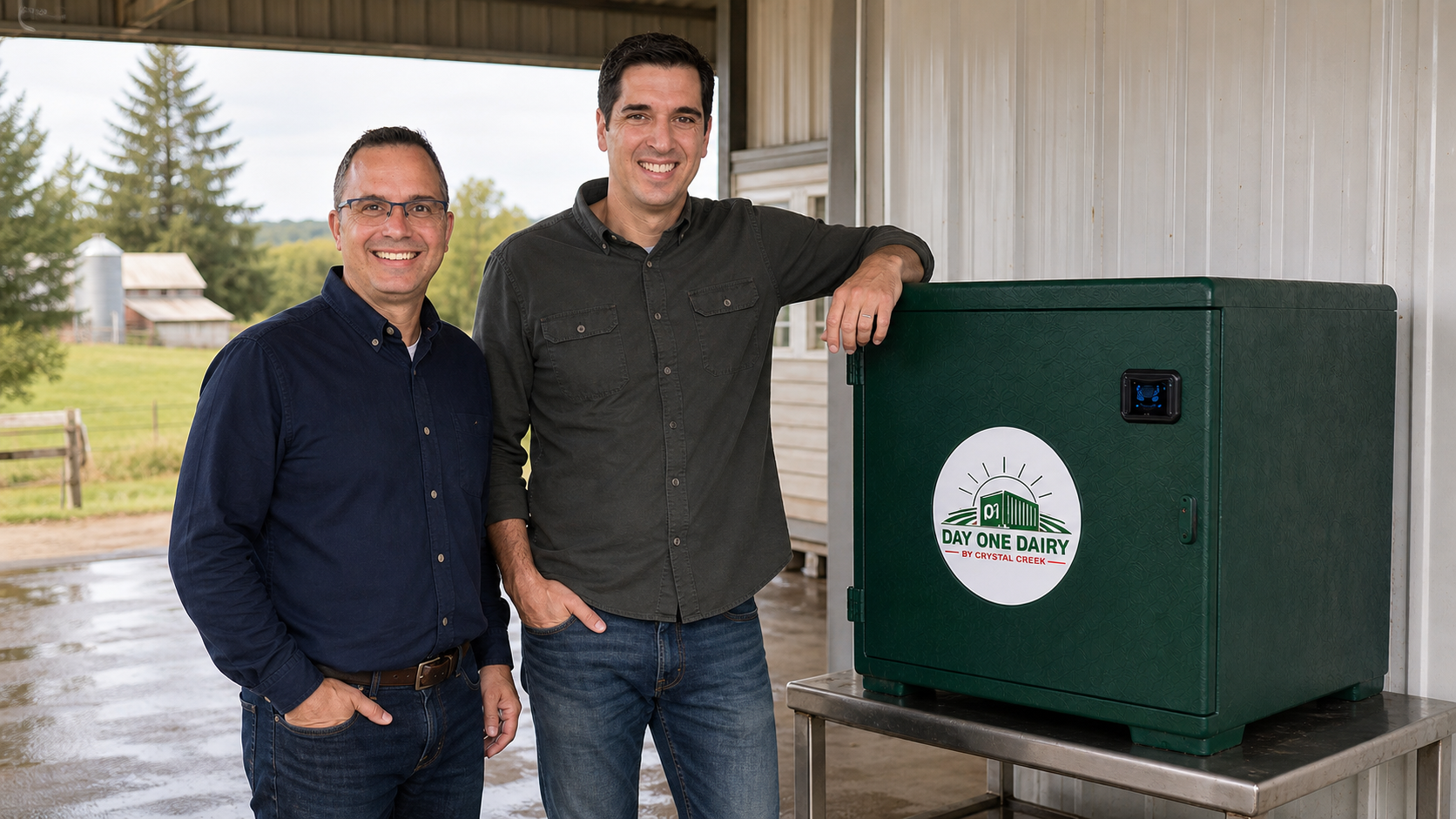
Day One Milk is the foundation of the range: a closed, cleanable module configured around milk receiving, pasteurizing, chilling, holding and cleaning. Capacity, equipment and utilities are matched to the herd, daily volume, climate and operating plan rather than sold as a generic box.
Day One Creamery is the next capability. It creates a separate food-grade environment for selected value-added pathways such as cream, butter, yogurt or cheese. Keeping milk handling and value-added processing modular allows a project to respect clean-space requirements, stage its investment and add only the products its local market can support.
The product sequence is deliberate. Secure the milk pathway first. Add the creamery when the operating plan, approvals and market justify it.
A family of practical capabilities
The broader range allows Day One Dairy to meet different operating realities without pretending that every farm needs the same system.
- Day One Goat adapts the approach for goats, sheep and other smaller-livestock programs, with vessels and workflows sized around a realistic herd and daily volume.
- Day One Rapid adds portable chilled or frozen capacity for farm collection, temporary holding and local delivery routes.
- Connected Operations is the support layer: local controls remain authoritative while approved system data can help Crystal Creek technicians diagnose issues remotely and guide operators with better information.
Together, the products form a pathway rather than a one-time sale: collect or receive the milk, control temperature, process what the market can use, protect the cold chain and maintain a relationship with experienced technicians after commissioning.
What changed in eight days
The eight-day sprint was not eight years of engineering compressed into just over a week. Crystal Creek had already done that work. The sprint converted the work into a market-facing system.
Survivor Mountain helped establish the Day One Dairy name and product architecture; define how Milk, Creamery, Goat, Rapid and Connected Operations relate; build the visual language; create realistic product explanations; develop the website; organize customer calls and enquiries; and turn a complex engineering proposition into a sequence people can follow.
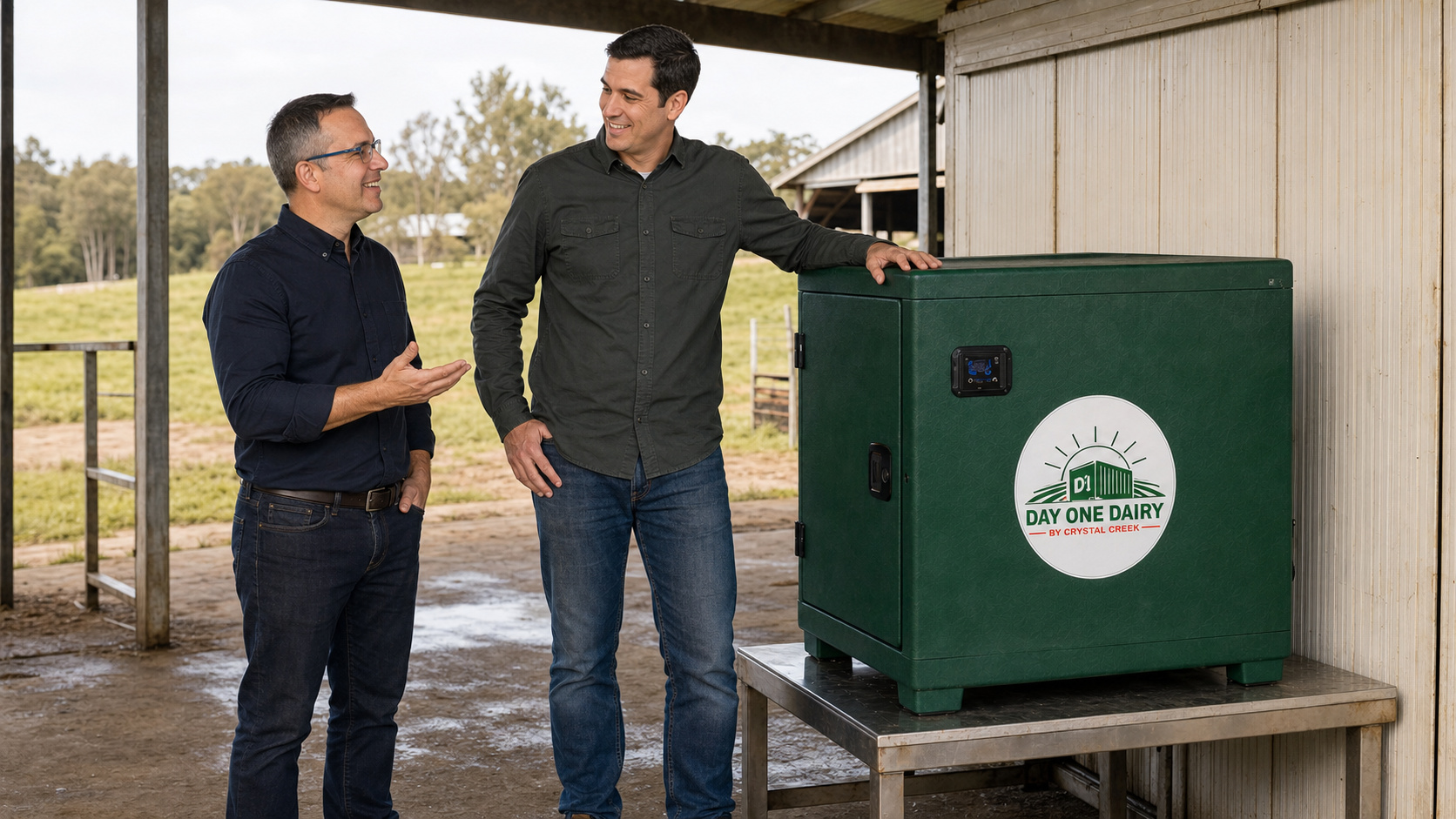
In this story, “launch” means the commercial launch: a clear name, product family, visual system, website and first route for customers and partners to begin a serious conversation. It does not mean that a field installation was completed in eight days, that approvals are automatic or that every site can be commissioned on the same timetable.
That distinction matters. Good product development makes an ambitious idea understandable without making promises the engineering team cannot responsibly keep.
From Oregon to prepared sites around the world
Day One Dairy is being developed for more than one kind of buyer. Farms may want a practical first processing step. Cooperatives may need shared capability. NGOs and governments may be exploring ways to retain more value near producers, strengthen local cold chains or support regional food resilience.
The international opportunity is significant, but it must remain grounded in the receiving location. Power, water, drainage, access, climate, operator training, animal flow, parts availability and local food rules all affect the final configuration. A successful modular system does not ignore those differences; it gives the project team a disciplined starting point for addressing them.
Crystal Creek’s preferred target is one-day commissioning when the module has completed factory testing and the receiving site, utilities, access, approvals and operators are fully prepared. It is a deployment objective under defined conditions—not a universal guarantee.
Why local-to-local collaboration worked
The most useful partnerships do not blur responsibility. Crystal Creek remained responsible for dairy engineering, fabrication, equipment, commissioning and technical support. Survivor Mountain focused on product strategy, positioning, digital experience and the systems that connect an interested buyer to the right next conversation.
Both firms are local. The ambition is international. That combination made it possible to work quickly without losing the practical judgment that comes from knowing the people, the business and the work behind the product.
For other Oregon manufacturers, there is a larger lesson here. A technically strong product can remain difficult to launch when naming, packaging, visuals, sales pathways and customer systems sit outside the manufacturer’s daily expertise. Bringing in those complementary skills does not replace the engineering team. It gives that team more room to concentrate on the work only it can do.
What comes next
The market launch creates a beginning, not a finish line. Crystal Creek can now move into structured customer discovery, site-specific engineering, equipment selection, regulatory conversations and factory-pilot planning with a product story that stays consistent from the first web visit to the technical call.
That is the real win: eight years of dairy knowledge now has a name, a family of products and a clear way for the right people to engage with it.
Explore Day One Dairy and its complete product family →
Building a technically complex product of your own? See how Survivor Mountain supports manufacturers and turns specialized expertise into a clear digital route to market, or explore our web and product-story development work.
Want to talk about how this could work for your business?
Let's Chat