Nature Farms: Control the Farms from One Location.
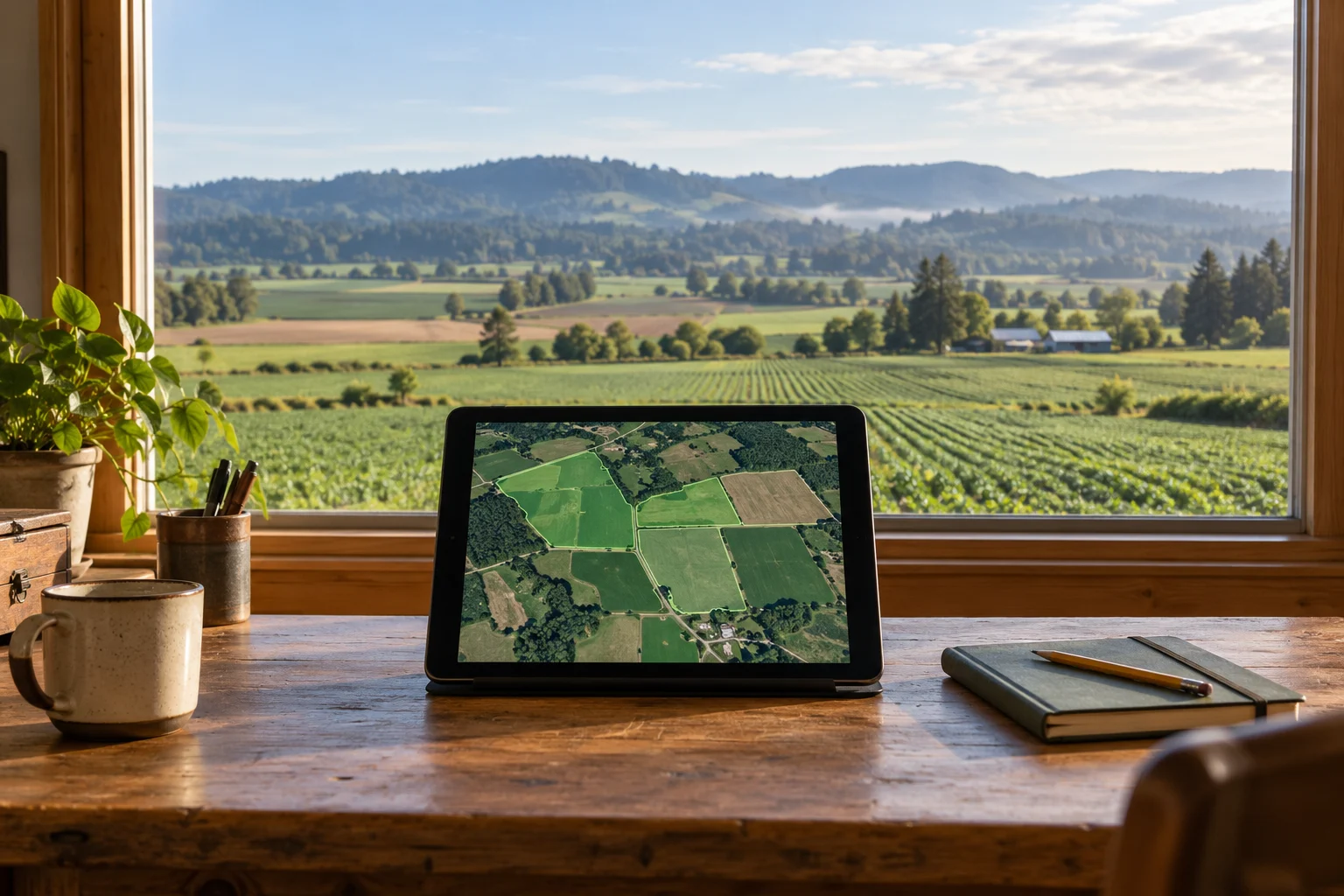
Farms are a big part of what we do. The work is practical: help the people running an operation spend less time chasing information and more time making informed decisions. Our current work with Nature Farms brings that approach to a connected farm-management app, designed around multiple farms and the people responsible for them.
Farm management that puts the owners’ interests first
Nature Farms manages farms for trusts and other businesses. Dennis and his team bring day-to-day oversight to the land, the crews and the decisions that matter to its owners.
Nature Farms is taking the lead within its own operations on automation and efficiency: investing in more consistent workflows, clearer information and less duplicated administration. The goal is to keep more value in the operation and return more profit to the owners. That is the business purpose of this work, not a claim of a measured profit increase from the pilot.
Looking for a team to manage your farm? Talk with Dennis at Nature Farms: 503-831-0101.
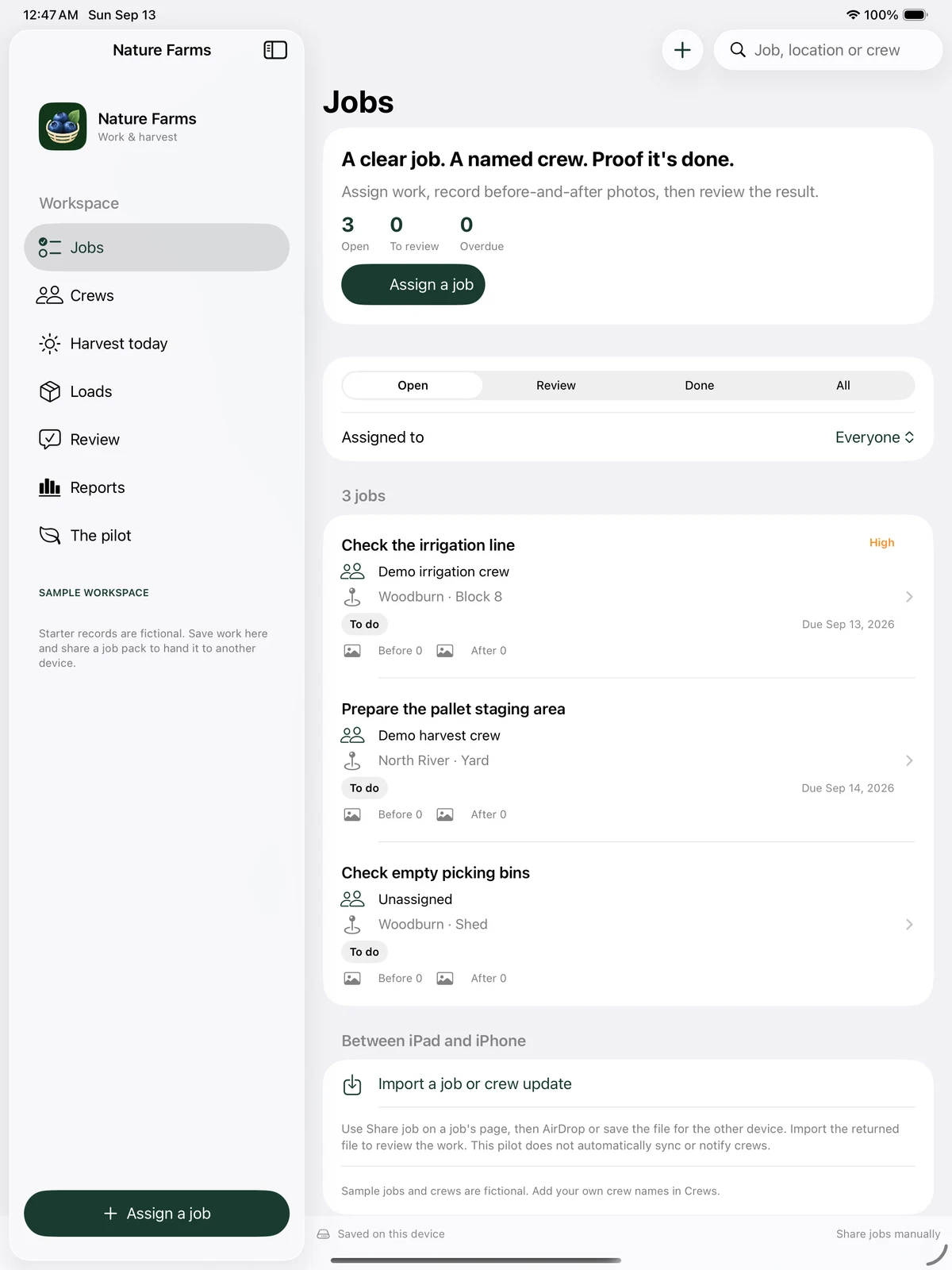
Project status: this is an active development programme. A working iPhone and iPad pilot demonstrates harvest capture and review, crew jobs and completion workflows. The screenshots here show fictional sample records in that pilot, with local storage and manual sharing. Shared live data, private AI, expanded operational modules and board automation are the broader programme—not a claim that every capability is already deployed.
Start with the record that needs chasing
For farms around Salem, Oregon and the Willamette Valley, a useful first step is to follow one harvest record from the field to the office. Where is it captured? Who checks it? What does the next person need before it can be used in a report?
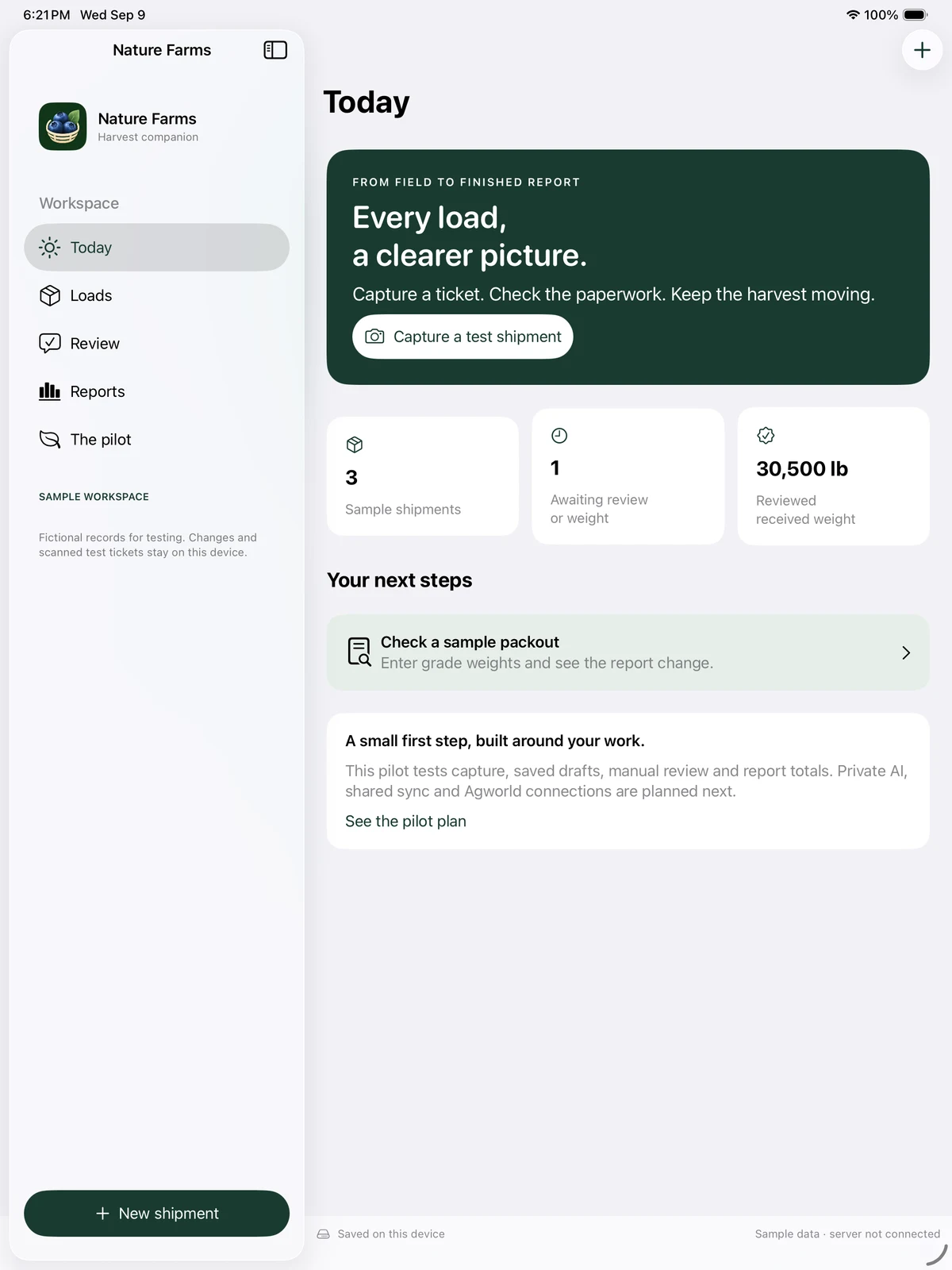
The pilot screens below make that sequence visible: capture the harvest, review the entry and keep crew work understandable. They are existing demonstration screens, not evidence of a new production rollout. The next proof to gather is how the workflow performs in everyday use: missing entries, corrections, review time and the effort needed to prepare a report.
For a practical starting checklist, read Moving Harvest Records Off Paper: Where to Start.
One place for the work across multiple farms
Control the farms from one location. The ambition is one clear operational view, whether Dennis is at a desk or out in the field with an iPad. It is about coordinating people and records across farms—not replacing hands-on judgement or claiming that remote machinery control is available today.
Harvest records, spray sheets, staff hours, equipment notes and management reports often describe the same operation from different angles. When they live in separate systems, someone has to reconnect them every week.
The Nature Farms direction is one app that keeps those records connected while preserving each farm’s identity. A manager should be able to move from the whole operation to a particular farm, plot, variety or season without losing the context. Staff should see the work relevant to them; managers and directors should have access appropriate to their responsibilities.
That is the foundation for easier compliance preparation, clearer staff-time management and fewer repeated requests for information—not another dashboard that needs someone to retype everything.
Keep compliance records and protocols systematic
Consistent processes matter when several farms, crews and owners depend on the same management team. The programme is designed to put training records, task protocols, chemical and spray details, maintenance schedules and follow-up checks into repeatable workflows. Managers can see the evidence, review exceptions and identify missing information instead of relying on memory or scattered paperwork.
For trusts and business owners, the intended benefit is clearer oversight and a more efficient operation. For crews, it is clearer expectations and fewer repeated questions. These expanded modules remain part of the development programme; software supports, rather than replaces, the people responsible for the work.
Harvest records that can be checked, not just collected
The pilot starts with capture, review and an understandable record of harvest activity. A draft or unresolved item remains distinguishable from an approved record. Managers can inspect the details before totals become part of the working picture.
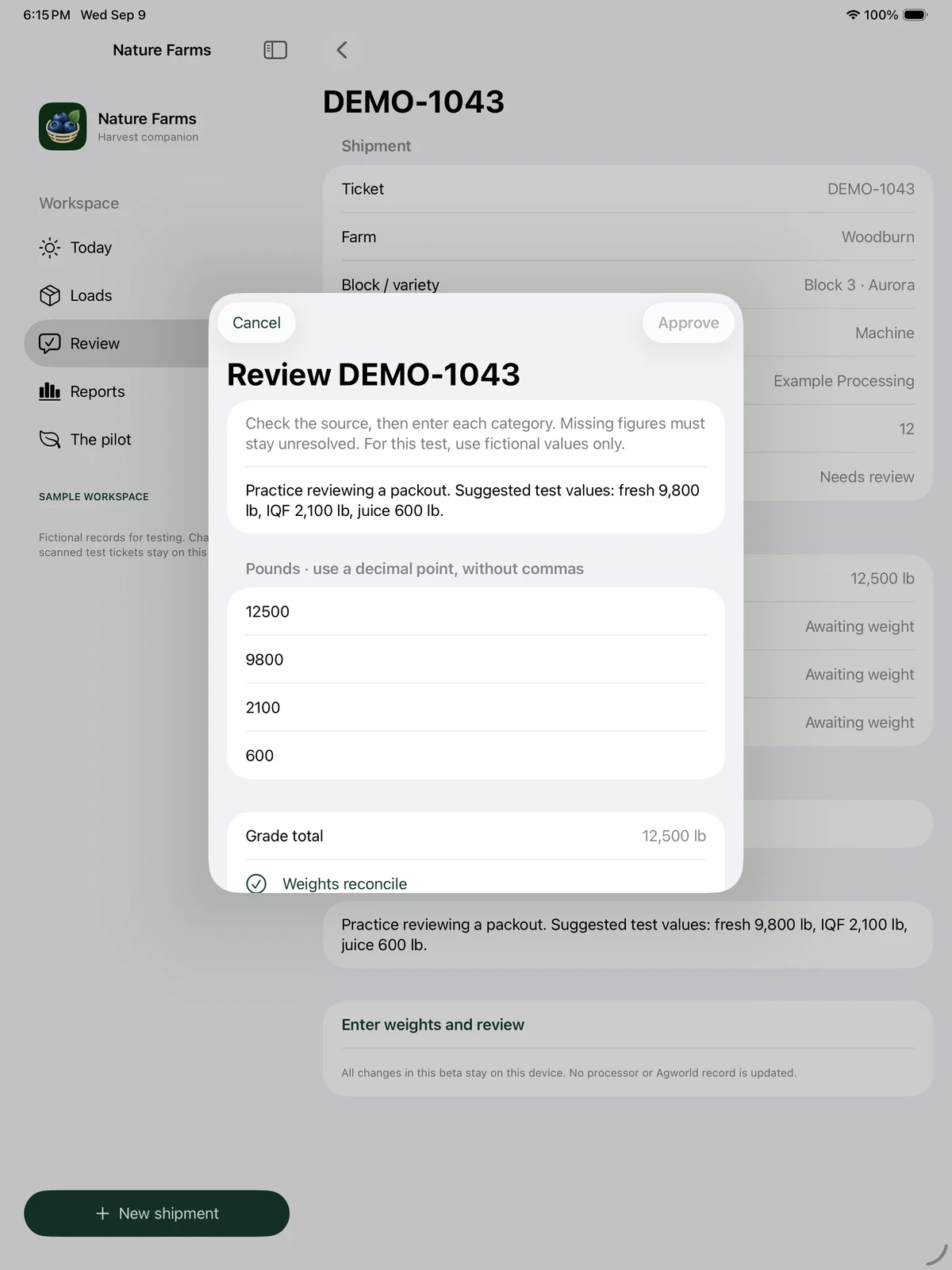
The wider compliance workflow is about making supporting evidence easier to find: what happened, where, when, who recorded it and what still needs attention. The app is intended to support the farm’s checks and reporting obligations; it does not replace professional review or guarantee regulatory compliance.
Crews, training, time and machinery in the same picture
A job means more than a checkbox. It has a location, an assigned crew, the right preparation and evidence that the work was completed. The current pilot brings crew assignments, job details and completion review into a mobile workflow.
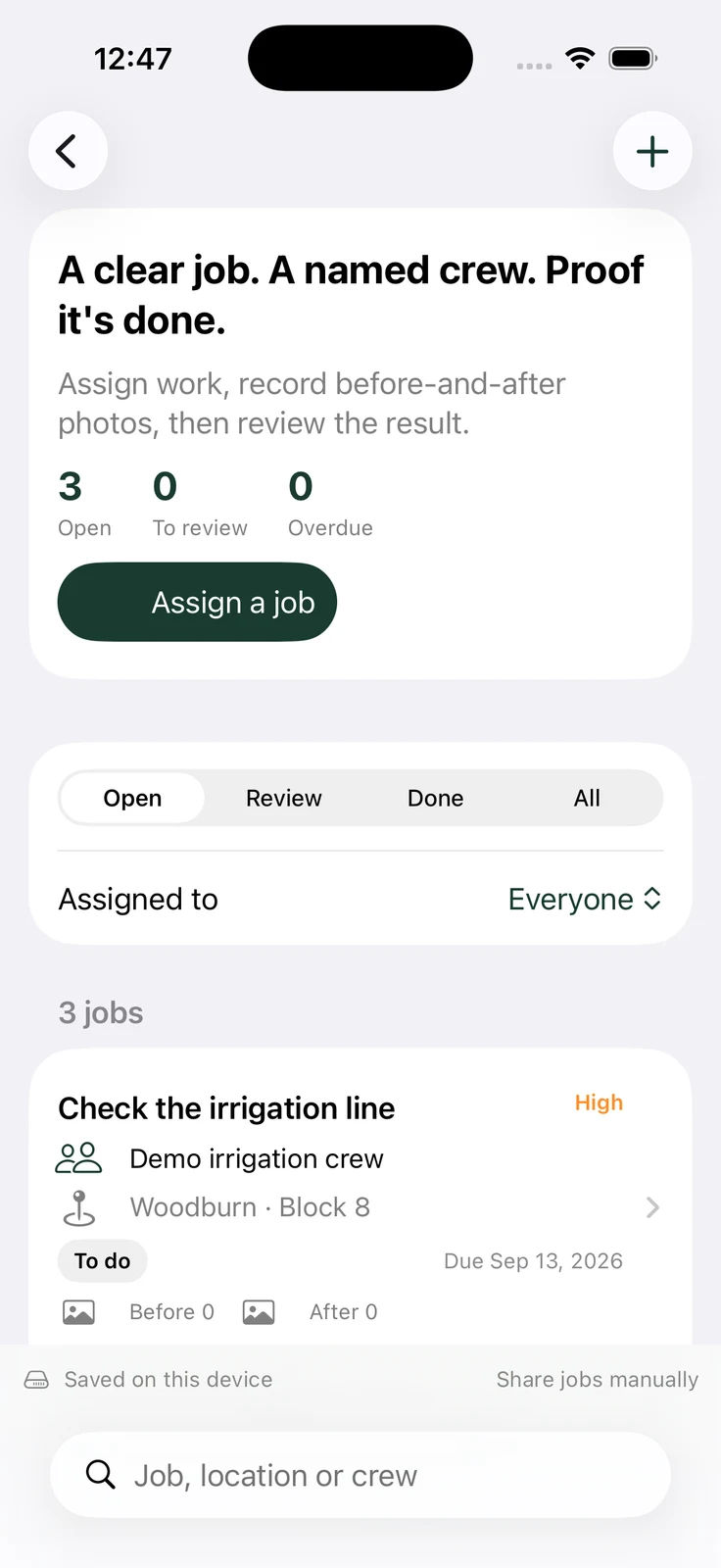
The development scope extends that picture to staff training, time spent on tasks and machine maintenance. The aim is to help managers plan who can do a job, see where working time goes and keep service records and equipment checks alongside the work they support.
Chemical levels, spray details and a plot’s history
The planned connected record includes chemical inventory levels, recorded product quantities and concentrations, application dates, spray details, operators and the plots involved. Units, source documents and unresolved entries need to remain visible rather than being silently treated as complete.
This is where connected information becomes especially useful: preparing a history for one plot should not require searching three years of folders. Managers still verify records and applicable requirements; the system’s job is to make the evidence easier to assemble and review.
A private AI assistant grounded in the farm’s own records
The private-AI work is aimed at practical questions, with answers drawn from authorised operational data rather than generic farming advice. These are examples of the questions we are designing for, not outputs from a deployed assistant:
“What chemicals have been on plot 54 in the past three years?”
The intended answer would assemble dated application records, identify the source of each entry and flag missing history. A gap in the records must not be presented as proof that nothing was applied.
“Which variety has the biggest yield per acre—and why?”
The first part calls for comparable, reviewed yield and acreage data. The second calls for care: weather, soils, timing and management may help explain differences, but a pattern alone does not establish a cause. The assistant should distinguish what the records show from possible explanations requiring an agronomist’s or manager’s judgement.
“Make a presentation for the board about this year’s achievements.”
The goal is a source-linked draft assembled from approved records, with the reporting period and outstanding items made clear. A person reviews the figures and narrative before the presentation is shared. Private access, traceable sources and clear limits are design requirements for this work.
Board access without waiting for the weekly meeting
The board-reporting direction combines permission-based access to a shared operational view with automatic weekly review drafts. Directors should be able to inspect the current picture between meetings instead of waiting for someone to prepare another spreadsheet.
“Live” should mean as current as the connected, synchronised sources—not a promise that an offline field record is instantly available everywhere. The planned view needs to show freshness, review status and exceptions alongside the numbers. Automated summaries should support the conversation, with managers retaining oversight.
The future: from your phone to automated farm machinery
From your phone to automated farm machinery—so farming can be managed on the move. That is the longer-term direction: connect the plan, the people and compatible machinery, so a manager can oversee work without being tied to a desk.
This is a future vision, not a currently available remote-control feature. Equipment-specific integrations, connectivity, permissions, operator oversight and safety validation must come first. The ambition is practical connected farming, with people still responsible for safe decisions.
Built around the way farms actually work
Nature Farms brings together the kind of work Survivor Mountain does best: understanding a real operation, building useful mobile tools and connecting information so it can serve the next decision. The pilot is a starting point for that wider programme—not the end of it.
For farm-management services: call Dennis at Nature Farms on 503-831-0101 to discuss your farm, trust or business.
For systems, apps and automation: talk with Paul about your farm’s workflows, or explore our farm-systems work. Start with the record you repeatedly have to chase, the report that takes too long or the question only one person can answer.
Related reads
When Staff Become the Link Between Orders and QuickBooks
An anonymous client story about connecting online orders, payment handling and QuickBooks, and removing a handoff that depended on family members.
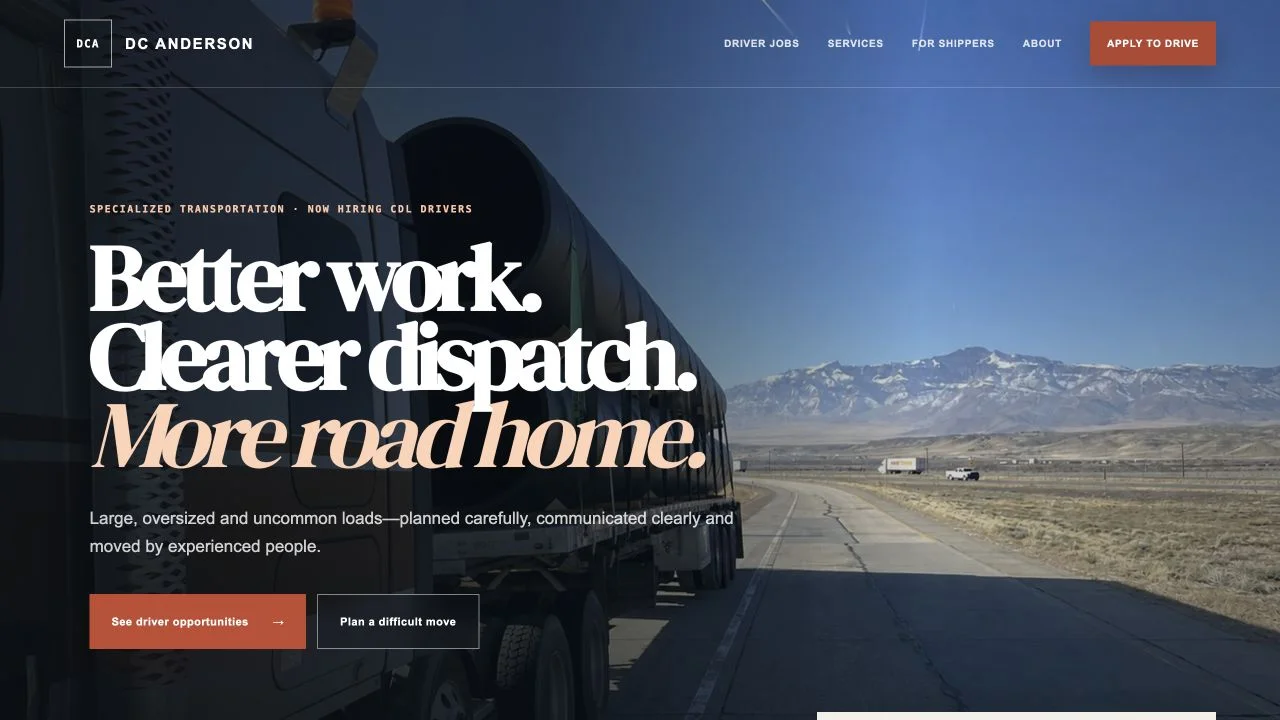
DC Anderson: One Website, Two Clear Paths.
A specialized-transport website built around two audiences: drivers exploring their next opportunity and shippers planning a difficult move.
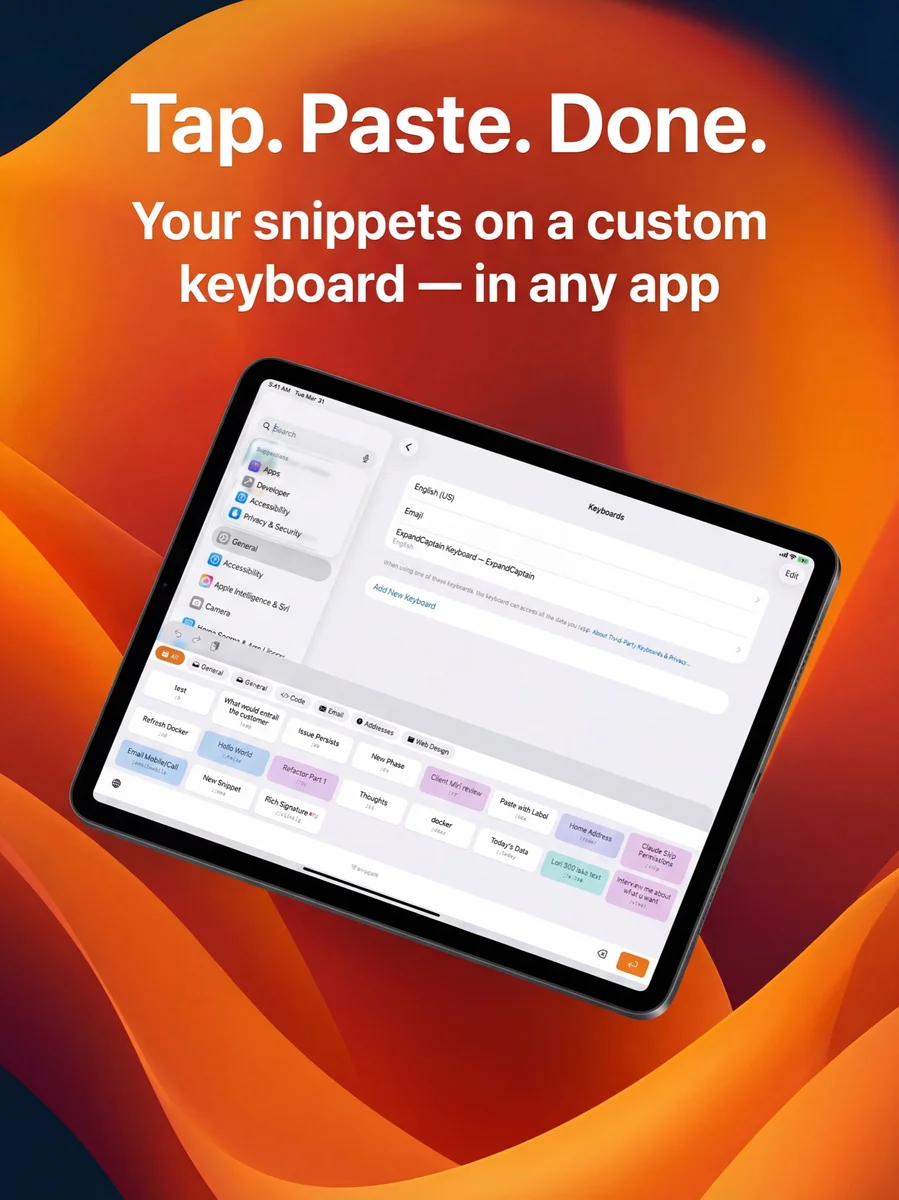
Expand Captain: Write It Once. Use It Everywhere.
A reusable text library for Mac, iPhone and iPad—built around the everyday messages people shouldn’t have to type twice.
Want to talk about how this could work for your business?
Let's Chat